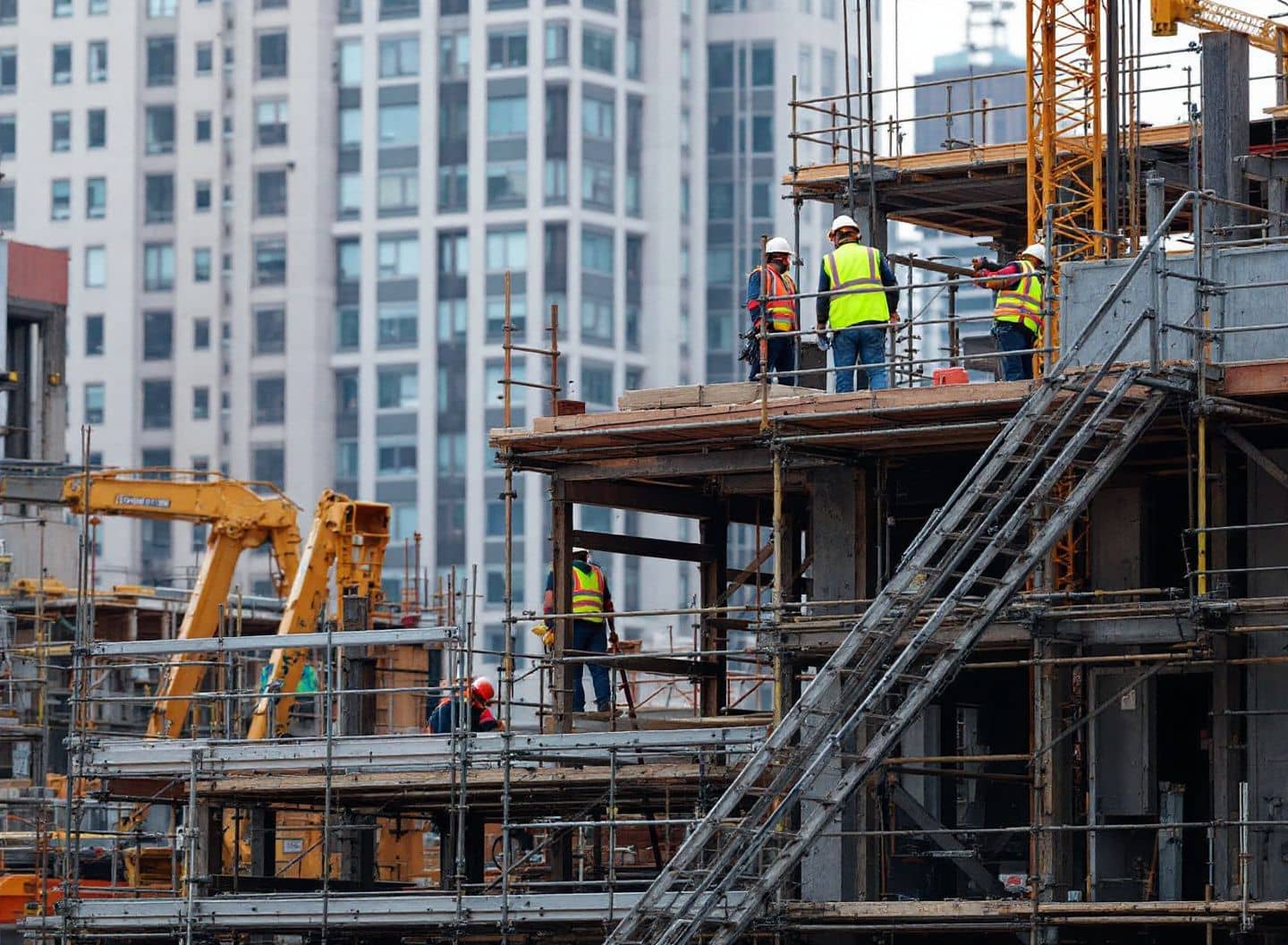
Most construction workers in New York know, at least vaguely, that the law offers strong protections when they're hurt on the job. Labor Law § 240, the so-called Scaffold Law, is one of the most powerful worker-protection statutes in the country. Fall-protection rules under 12 NYCRR 23-1.7 and federal standards like 29 CFR 1926.501 add another layer of accountability for contractors and site owners. But knowing those laws exist and actually being able to use them are two very different things. When the job site is owned or operated by a public entity, a procedural rule called the Notice of Claim can silently kill a valid case in just 90 days, before a worker has even finished physical therapy.
What Makes a Public Construction Site Different?
Private construction projects and public construction projects look nearly identical from a hard hat's perspective. Workers pour concrete, erect scaffolding, operate hoists, and work at elevation regardless of who ultimately owns the structure being built. The difference shows up in the courthouse, not on the job site.
Public entities in New York include the City of New York itself, the New York City Housing Authority (NYCHA), the Metropolitan Transportation Authority (MTA), the School Construction Authority (SCA), and dozens of other agencies and authorities. When any of these entities owns a construction site, employs general contractors through a public contract, or controls the work being performed, they are generally considered 'public' defendants. That classification triggers the Notice of Claim requirement under General Municipal Law § 50-e.
Under that statute, a claimant must serve a written Notice of Claim on the public entity within 90 days of the date the claim arises. For a construction accident, the clock almost always starts ticking on the day of the injury. Miss that window, and a court can dismiss the case entirely, regardless of how serious the injuries are or how clear the liability may be.
How Construction Workers Get Hurt on Public Job Sites
Understanding the injury mechanisms matters because it affects how a claim is framed and which laws apply. Falls from elevation are the dominant cause of serious and fatal injuries on construction sites across New York City. A carpenter working on a publicly funded school renovation who steps onto an unsecured scaffold plank, a laborer repairing an MTA station who falls through an unguarded floor opening, an ironworker on a city-contracted bridge project who slips from a ladder without proper footing support: these are the kinds of incidents that generate Labor Law § 240 claims every year.
Fall-protection failures fall especially hard on trade workers who have little control over site conditions set by owners and general contractors.
Beyond falls, public construction sites generate crush injuries from unsecured materials, struck-by incidents from overhead work, and electrocution hazards from inadequately protected wiring. Each trade carries its own risk profile. Electricians face electrocution and arc-flash dangers in enclosed spaces. Ironworkers are exposed to fall risk at extreme heights with shifting loads above them. Laborers often occupy the lowest rungs of the site hierarchy and receive the least safety training while doing the most physically hazardous cleanup and support work.
The Legal Framework That Should Protect These Workers
New York's Labor Law offers some of the strongest protections for construction workers anywhere in the United States. Labor Law § 240(1) may impose liability on covered owners and contractors when a required safety-device violation proximately causes an elevation-related injury; a worker’s sole proximate cause and the statutory exemption for certain one- and two-family homeowners remain fact-dependent issues. The statute specifically requires that scaffolding, hoists, ladders, and protective devices be properly furnished, erected, and operated during building work. If a scaffold collapses because it wasn't properly secured, or if a worker falls because no fall-arrest system was provided, the owner and contractor can be held liable even if they weren't personally present at the moment of the accident.
Labor Law § 241(6) adds a complementary layer of protection by requiring that construction, excavation, and demolition work be conducted in a way that provides reasonable and adequate protection for workers. A § 241(6) claim requires a violation of a specific, applicable Industrial Code subsection that constitutes negligence and proximately causes injury; comparative negligence may reduce recovery. 12 NYCRR 23-1.7, for example, specifies rules for protecting workers from overhead hazards, from hazardous openings in floors and other surfaces, and from slipping in areas where ice, snow, or other slippery materials accumulate. A violation of a specific, applicable 23-1.7 subsection may support that claim if the remaining negligence and causation requirements are met.
Federal standards also matter. OSHA's fall-protection rule under 29 CFR 1926.501 requires that workers on walking or working surfaces with unprotected sides or edges six feet or more above a lower level be protected by guardrail systems, safety net systems, or personal fall-arrest systems. Evidence of a 29 CFR 1926.501 violation can be used to establish negligence in a civil lawsuit, even though OSHA itself doesn't create a private right of action. Attorneys often use OSHA inspection reports and citations as supporting evidence in construction injury cases.
The 90-Day Trap: Why So Many Valid Cases Get Dismissed
Here's where everything falls apart for workers who don't know the rules. For a general personal-injury action, CPLR 214(5) sets a three-year period; claims against covered public defendants generally require a notice of claim within 90 days under GML § 50-e and suit within one year and 90 days under GML § 50-i. Three years feels like plenty of time to recover, consult an attorney, and make thoughtful decisions about litigation.
But when one of the defendants is a public entity, that three-year window doesn't apply in the same way. Before filing suit against a public entity, the injured worker must first serve a Notice of Claim. That notice must be served within 90 days of the date the claim arises. Ninety days is roughly three months. For a worker who suffers a serious injury on day one, spends weeks in the hospital, undergoes surgery, and then focuses on rehabilitation, 90 days can pass in a blur.
Hurt on a Construction Site?
Tell us what happened. A licensed New York attorney will review your case and call you — free, no obligation.
The Notice of Claim isn't a lawsuit. It's a formal written document that tells the public entity, in specific terms, the nature of the claim, when and where the incident occurred, the nature of the injuries, and the damages being sought. Courts take the adequacy of the notice seriously. A vague or incomplete notice can be challenged almost as effectively as a late one.
Courts can grant permission to file a late Notice of Claim in some circumstances, but the process is neither simple nor certain. The court considers factors including whether the public entity had actual notice of the essential facts within 90 days or shortly after, whether there's a reasonable excuse for the delay, and whether the delay substantially prejudiced the public entity's ability to investigate. A prolonged hospital stay or documented incapacity can support a late-notice application, but nothing about that process is automatic.
Which Public Entities Trigger the Requirement?
This is where workers and even some attorneys make costly mistakes. The list of public entities that require a Notice of Claim is longer than most people expect. The City of New York obviously qualifies. But so does NYCHA, which controls an enormous portfolio of residential towers where construction and renovation work happens constantly. The MTA and its subsidiaries, including the New York City Transit Authority and the Long Island Rail Road, require notices for claims arising from work on their properties and projects. The Port Authority of New York and New Jersey, which governs major infrastructure including bridges, tunnels, and airports, has its own notice requirements with slightly different procedural rules.
The School Construction Authority, responsible for building and renovating New York City public schools, is another entity where construction activity is frequent and notice requirements apply. Even state entities like the Dormitory Authority or the Office of General Services can be involved in construction projects that trigger notice obligations.
A mixed job site, where a public entity owns the property but a private general contractor runs the work, can require notices against the public entity while allowing a standard timeline against the private parties. That complexity means workers and their attorneys must carefully map every defendant from the earliest possible moment.
Practical Steps After a Public Construction Site Injury
No article about legal deadlines should replace consultation with a qualified attorney, but there are practical realities every injured worker should understand. First, document everything immediately. Photographs of the accident scene, the defective equipment or unsecured scaffold, the absence of fall-protection systems, witness contact information, and the injured worker's own account of what happened should all be preserved as close to the date of injury as possible. Evidence disappears quickly on active construction sites.
Second, identify who owns and who controls the job site. Ask your foreman, your union representative, or a coworker. Look at signage posted at the site entrance. Find the building permit, which will identify the owner of record and the general contractor. This information is critical to determining whether public-entity notice requirements apply.
Third, consult with an attorney experienced in New York construction accident law as soon as you are physically able to do so. Given that 90 days passes quickly, waiting until after workers' compensation proceedings are resolved is often a serious mistake. Workers' compensation and a third-party construction lawsuit are separate legal tracks; pursuing one doesn't bar the other, but the 90-day clock doesn't pause for the comp process.
Fourth, don't assume your union or employer's insurer is protecting your individual interests. They have their own obligations that may not align with your right to pursue a personal injury claim against a negligent owner or contractor. A workers' compensation carrier has a lien against any third-party recovery, but that's a financial matter to be sorted out, not a reason to avoid pursuing a valid claim.
The Stakes Are Too High to Wait
Construction injuries can be permanently disabling. A spinal injury from a fall can affect a worker's ability to earn a living for the rest of their life. A traumatic brain injury from a struck-by incident can change a person's personality, memory, and cognitive function in ways that affect the whole family. The value of a construction injury claim varies with the severity of the injury, the nature of the work the person can no longer perform, and the degree of fault attributable to the owner and contractor. None of that matters if the Notice of Claim deadline passes without action.
Labor Law § 240, 12 NYCRR 23-1.7, and 29 CFR 1926.501 exist precisely because construction is dangerous and workers deserve legal protection when site owners and contractors cut corners on safety. But those protections are procedural as much as substantive. A worker who knows their rights under the Scaffold Law but doesn't know about the Notice of Claim requirement may find that knowledge worthless when a court closes the courthouse door.
If you or someone you know was injured on a public construction project in New York City, the most important thing you can do right now is find out how much time remains on that 90-day clock. Then act.
Attorney Advertising. Prior results do not guarantee a similar outcome. This article is for general informational purposes only and does not constitute legal advice. NY Construction Advocate connects injured workers with experienced New York construction accident attorneys.
Primary sources
Frequently Asked Questions
What is a Notice of Claim and why does it matter for a construction injury case?▼
Which public entities in New York City require a Notice of Claim for construction injuries?▼
Can a court allow a late Notice of Claim if the worker was hospitalized after the injury?▼
How does Labor Law § 240 apply to injuries on a public construction site?▼
Does filing a workers' compensation claim protect my right to sue under Labor Law § 240?▼
What role do OSHA regulations like 29 CFR 1926.501 play in a civil construction injury lawsuit?▼
What information should a worker gather immediately after a public construction site injury?▼
Get a Free Case Review
Find out if you have a claim under New York Labor Law. A licensed NY attorney will review your case and call you back.