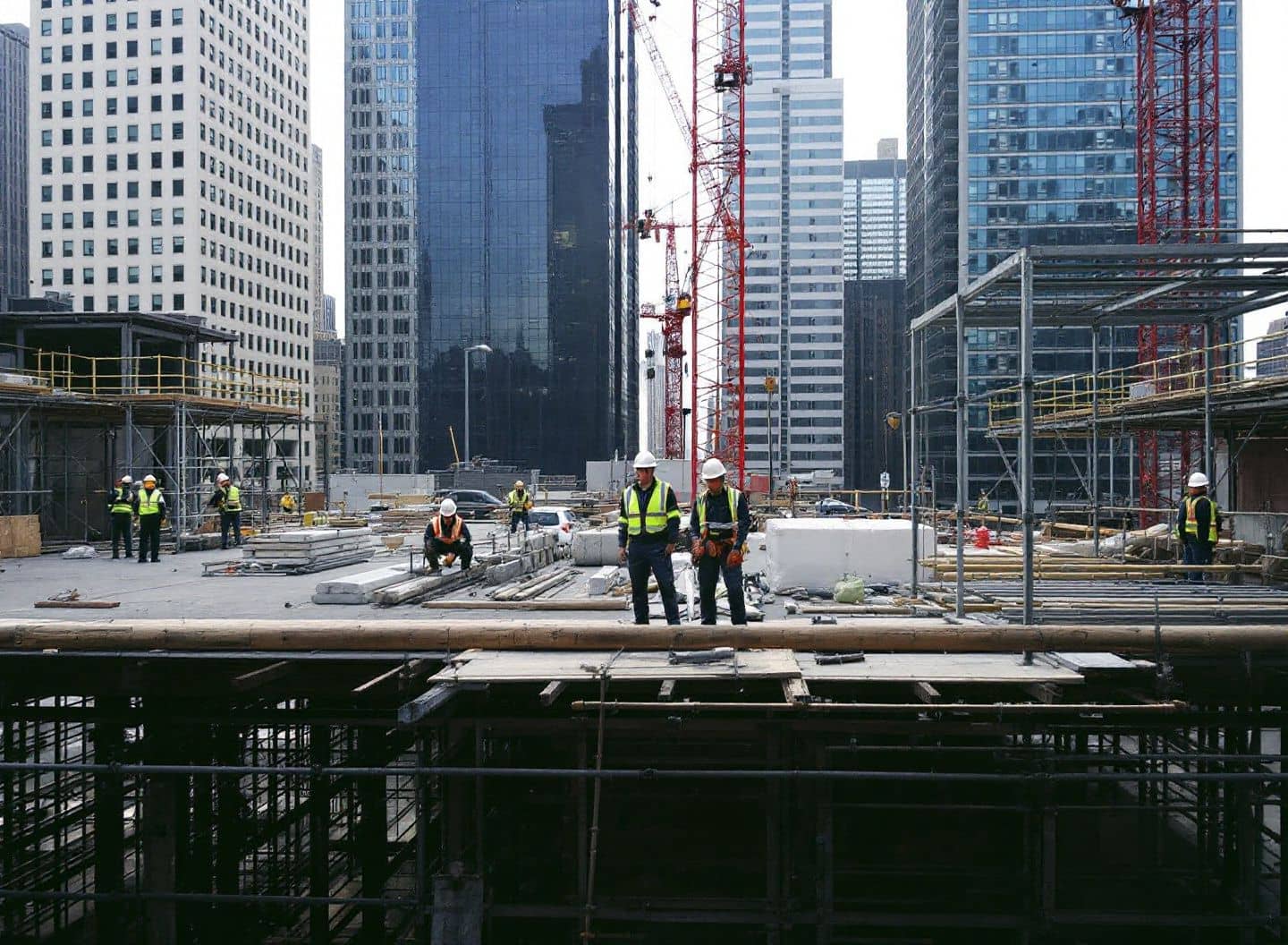
New York construction sites are among the most hazardous workplaces in the country. Workers operate at height, around heavy machinery, in tight excavations, and amid constantly shifting conditions. When something goes wrong and a worker is seriously hurt, the legal question isn't just 'who was careless?' It's also 'who had the legal duty to prevent this?' That's exactly where Labor Law § 200 enters the picture. It's not a technical or obscure statute. It codifies a duty whose application to an owner or general contractor generally depends on the relevant supervisory control or notice of a dangerous condition.
What Labor Law § 200 Actually Says
Labor Law § 200 is New York's codification of the common-law duty to provide a safe place to work. The statute requires that workplaces be 'so constructed, equipped, arranged, operated and conducted as to provide reasonable and adequate protection' to both employees and lawful visitors on the site. It also mandates that machinery and equipment be properly positioned, operated, guarded, and illuminated for safety. The New York State Department of Labor has authority to create rules implementing this provision, and it has done so through regulations like 12 NYCRR 23-1.5, which states general responsibilities of employers.
What makes Labor Law § 200 significant is that it doesn't just restate a moral principle. It gives injured workers a statutory cause of action against owners and general contractors who fail to meet that duty. Long before this statute existed, courts recognized a common-law obligation for employers to maintain safe premises. Labor Law § 200 picked up that obligation, put it in writing, and made it enforceable as a matter of law, not just equity.
Two Distinct Categories of Claims Under Labor Law 200
Courts in New York have consistently recognized that Labor Law § 200 claims fall into two broad categories. Understanding the difference matters enormously, because the path to proving liability is different for each.
The first category involves dangerous or defective site conditions. Think of a trench that's not properly shored, a floor opening that's left uncovered, standing water on a walkway, or debris scattered across a path that workers use every day. In these cases, the injured worker must show that the owner or general contractor either created the dangerous condition or had actual or constructive notice of it and failed to correct it. The focus is on what the party in control knew or should have known about the physical state of the site.
The second category involves the means and methods of the work itself. This arises when the injury stems from the way a specific task was being performed, rather than a condition of the premises. A good example is a worker injured because a supervisor directed them to use a particular technique for cutting material, or because a subcontractor's crew was operating equipment in a way that created risk for nearby trades. In these cases, the key question is whether the owner or general contractor had the authority to supervise or control the work that led to the injury. If they simply stopped by to check on progress but had no say in how the work was done, that can undercut a Labor Law § 200 claim, though it won't necessarily defeat claims under other statutes.
Who Is Actually Responsible Under the Statute
The parties most commonly named in Labor Law § 200 claims are property owners and general contractors. This makes sense because they typically exercise the greatest degree of control over the overall site. A property owner who hires a GC to manage a project doesn't get a free pass simply by virtue of having delegated day-to-day operations. If the owner retained the ability to walk the site, identify hazards, and direct corrective measures, courts will look at whether that control was exercised responsibly.
General contractors occupy an especially significant position. They coordinate the activities of subcontractors across multiple trades, manage scheduling, and are often the ones setting the overall safety culture on a job. When a GC knows that a particular work area is hazardous and takes no steps to address it, or when a GC's supervisory instructions lead to a dangerous work method, that GC can face direct liability under Labor Law § 200.
It's worth noting that Labor Law § 200 is not limited to employers in the traditional sense. The statute protects 'employees and lawful visitors.' That means delivery workers, inspectors, and others with a legitimate reason to be on the site can potentially bring a claim if they're injured as a result of a hazardous condition the owner or GC controlled or knew about.
How Federal Safety Standards Interact With New York's Duty
Federal OSHA rules and New York's labor laws are separate frameworks, but they reinforce each other in important ways. The federal standard found at 29 CFR 1926.20 requires employers engaged in construction work to initiate and maintain safety programs that provide for frequent and regular inspections of the jobsite, materials, and equipment by competent persons. This rule reflects the same core idea embedded in Labor Law § 200: active, ongoing attention to site conditions is not optional. It's a baseline obligation.
Hurt on a Construction Site?
Tell us what happened. A licensed New York attorney will review your case and call you — free, no obligation.
While a violation of 29 CFR 1926.20 alone doesn't automatically create liability under New York law, it can be relevant evidence in a civil case. If a party failed to conduct inspections that federal law required, that failure speaks directly to whether the site was being operated in a way that provided reasonable and adequate protection, which is precisely the standard Labor Law § 200 demands. Plaintiffs' attorneys often use OSHA records and inspection histories to support the argument that hazards were known and ignored.
Trade-Specific Risks and the Mechanism of Injury
Labor Law § 200 claims arise across virtually every construction trade, but certain patterns recur. Falls from height are the most frequently cited category of serious construction injury in New York. A carpenter working on a platform with missing guardrails, an ironworker crossing an unguarded floor opening, a roofer with no fall protection at all: in each case, the question of whether the owner or GC knew about the inadequate protection goes directly to § 200 liability.
Electricians and plumbers frequently work in confined spaces or around energized equipment. When inadequate guarding, poor illumination, or improper equipment positioning leads to an electrocution or burn injury, the statute's specific language about machinery being 'properly positioned, operated, guarded, and illuminated' becomes directly relevant. Masonry workers who are injured by falling debris from overhead operations face a similar analysis: was there a condition on the site that the controlling party knew about, and did they fail to address it?
Excavation and demolition work carries its own category of risk. Trench collapses, unstable demolition structures, and falling materials from demolition above all represent conditions that can and should be identified during regular site inspections. This is where both 12 NYCRR 23-1.5, which addresses safety in construction, demolition, and excavation specifically, and 29 CFR 1926.20 provide concrete guidance about what 'reasonable and adequate protection' actually looks like in practice.
The Comparative Negligence Complication
Unlike Labor Law § 240(1), which requires a statutory safety-device violation that proximately caused an elevation-related injury before comparative negligence is excluded, Labor Law § 200 claims are subject to comparative negligence. That means a defendant can argue that the injured worker was partly responsible for what happened. If a jury agrees, it can reduce the award proportionally. This is one reason why the specific facts of how an accident occurred matter so much in § 200 cases. Evidence about whether safety equipment was available but not used, whether warnings were posted, or whether the worker deviated from instructions all becomes fair game.
That said, comparative negligence doesn't eliminate a claim. A worker can be found partially at fault and still recover compensation. The value of the recovery varies with the severity of the injury, the degree of fault attributed to each party, and the specific economic and non-economic losses the worker has suffered. Workers dealing with long-term disability, repeated surgeries, or permanent impairment often face the most complex liability and damages questions.
Why the 'Notice' Question Is Often the Center of the Fight
In site-condition cases under Labor Law § 200, defendants frequently argue that they had no notice of the dangerous condition. Courts distinguish between actual notice (the party was directly told about the hazard or observed it) and constructive notice (the hazard was so obvious or long-standing that the party should have discovered it through reasonable inspection). If a pile of debris has been accumulating for two weeks in a walkway, and the GC's superintendent walks past it every morning, arguing lack of notice is a difficult position to defend.
This is why documentation matters enormously. Incident reports, safety inspection logs, OSHA inspection records, and photographs of site conditions taken close in time to an accident can all speak to what the controlling parties knew. Workers and their families should preserve any photographs or communications they have access to, and an attorney experienced in construction accident law can often obtain additional records through discovery.
Practical Takeaways for Workers and Their Families
If you or a family member has been injured on a New York construction site, it's worth understanding that Labor Law § 200 may be just one of several statutes that apply to your situation. Labor Law § 240(1) and § 241(6) can also apply depending on the type of accident. These claims often overlap, and the specific facts determine which theories are strongest. Don't assume that because your direct employer carries workers' compensation insurance, that's the only avenue available. Workers' compensation covers medical bills and a portion of lost wages, but it doesn't compensate for pain and suffering. A Labor Law § 200 claim against an owner or GC is a separate civil action that can address losses that workers' comp doesn't.
Time limits apply to construction accident claims in New York. Under CPLR 214(5), personal injury actions against private defendants generally must be commenced within three years. Municipal claims generally require notice within 90 days under GML § 50-e and suit within one year and 90 days under GML § 50-i; State claims follow Court of Claims Act § 10. Consulting with a lawyer as soon as possible after an injury, even if you're still recovering, is the best way to protect your options.
Attorney Advertising. Prior results do not guarantee a similar outcome. This article is for general informational purposes only and does not constitute legal advice. NY Construction Advocate connects injured workers with experienced New York construction accident attorneys.
Primary sources
Frequently Asked Questions
What is Labor Law § 200 and who does it protect?▼
Can a property owner be sued under Labor Law § 200 even if they hired a general contractor to manage the project?▼
How is a Labor Law § 200 claim different from a Labor Law § 240(1) claim?▼
What does it mean for a defendant to have 'constructive notice' of a dangerous condition?▼
Does a violation of 29 CFR 1926.20 or 12 NYCRR 23-1.5 automatically prove liability under Labor Law § 200?▼
If a worker is partially at fault for their own injury, can they still recover under Labor Law § 200?▼
How long does a worker have to file a Labor Law § 200 claim in New York?▼
Get a Free Case Review
Find out if you have a claim under New York Labor Law. A licensed NY attorney will review your case and call you back.