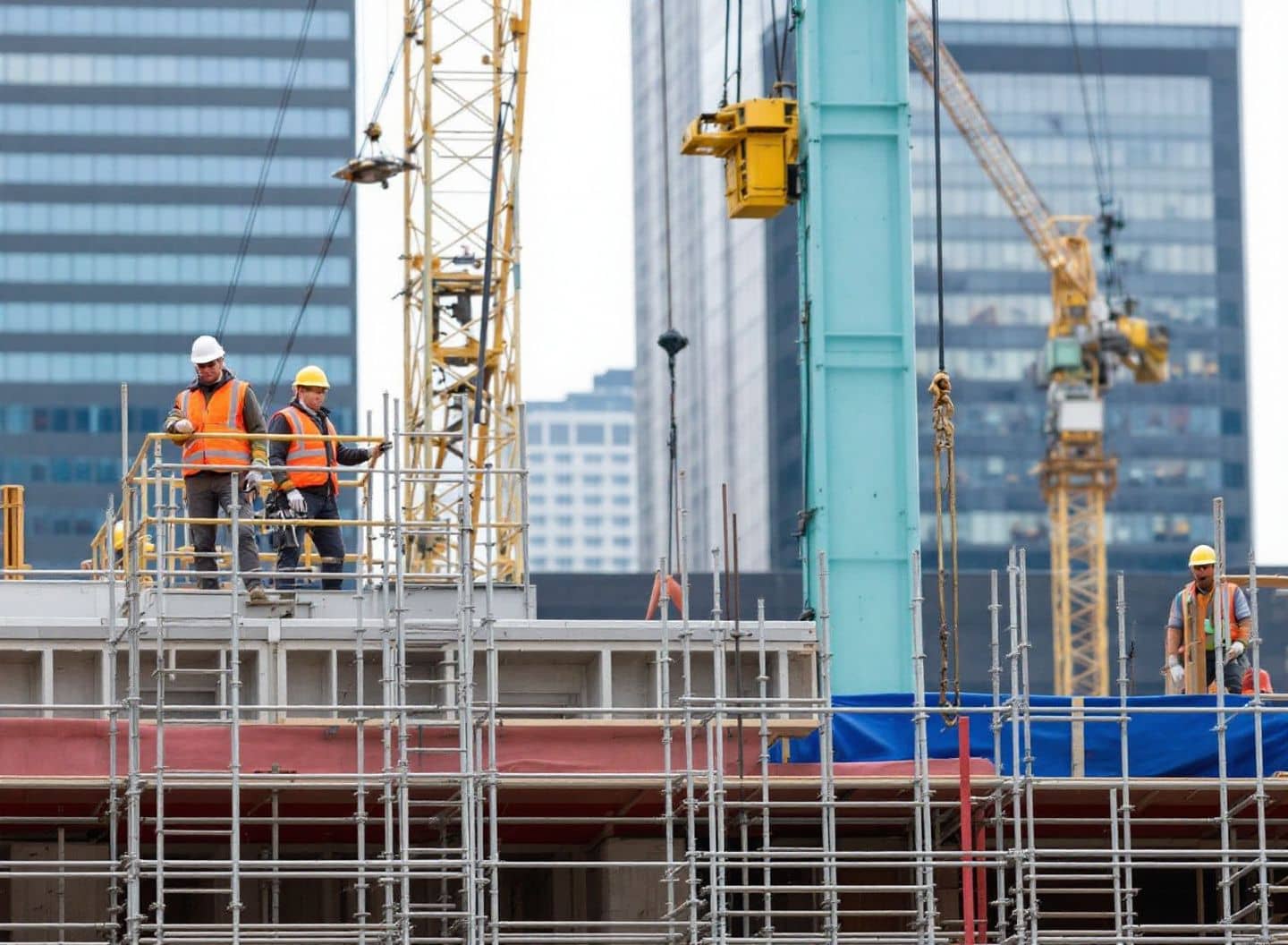
A construction worker gets hurt on a job site. The fall happened from a scaffold that was improperly braced. The scaffold was supplied by a rental company, erected by a subcontractor, inspected (or not) by the general contractor, and the whole project sits on land owned by a real estate developer. So who's responsible? In New York, the honest answer is: possibly all of them. That's not a legal trick. It's how the state's Labor Law framework is deliberately structured, and understanding that structure can make the difference between a partial recovery and a fair one.
Why New York Law Casts a Wide Net
New York's Labor Law statutes are among the most worker-protective in the country. The legislature made a policy choice decades ago: when someone is injured doing dangerous construction work, the parties who profit from that work and control that work environment should bear the financial consequences, not the individual worker who showed up to do a job. That philosophy drives how courts interpret the law today.
Three main statutes govern most construction accident claims. Labor Law § 200 is the general duty provision, requiring that workplaces be constructed, equipped, arranged, operated, and conducted to provide reasonable and adequate protection to workers and lawful visitors. Under Labor Law § 240(1), the so-called Scaffold Law, an owner or general contractor can be liable when a required safety device was missing or failed to give proper protection against an elevation-related risk and that violation was a proximate cause of the injury. Labor Law § 241(6) requires compliance with specific Industrial Code rules (12 NYCRR Part 23) for construction, demolition, and excavation work; a claim requires that a specific, applicable Industrial Code rule was violated, the violation amounted to negligence, and it was a proximate cause of the injury, and comparative fault can reduce recovery. Federal requirements also apply: 29 CFR 1926.20 establishes baseline accident prevention responsibilities for construction employers under OSHA, and violations of those regulations often appear alongside state claims in litigation.
Each statute reaches different defendants differently, and the interaction among those claims is what makes New York construction litigation unusually complex.
The Property Owner: Silent Partner or Active Defendant?
Owners often believe that hiring a general contractor insulates them from liability. Under New York's Labor Law, it largely doesn't. For claims under § 240(1) and § 241(6), an owner's liability is essentially non-delegable. It doesn't matter whether the owner ever set foot on the site. If a worker covered by the statute is injured because of a gravity-related hazard or a violation of a specific safety regulation, the owner is exposed.
There are limited exceptions. Owners of one- and two-family dwellings who contract for the work but don't direct or control it are exempt. But commercial developers, real estate investment entities, and institutional owners rarely qualify for that carve-out. For the homeowner exemption, courts look at whether the owner actually directed or controlled the work, not just whether the owner had a say in the project.
Under Labor Law § 200, the analysis shifts slightly. That statute requires proof that the owner had actual or constructive notice of a dangerous condition and the authority to correct it. A passive owner who truly never visited the site and had no control over the means and methods of work may avoid § 200 liability, but the other statutes still apply.
General Contractors: Control Means Responsibility
General contractors sit at the center of most construction accident cases. They coordinate the entire project, hire and supervise subcontractors, maintain the overall job site, and typically have the most authority to enforce safety protocols. That authority is exactly what makes them liable under multiple theories.
Under § 240(1), a GC is treated the same as an owner: it can be liable when a required safety device was missing or failed to give proper protection against an elevation-related risk and that violation was a proximate cause of the injury. Under § 241(6), the GC must ensure that specific, applicable Industrial Code rules are followed throughout the project; a violation supports a claim when it amounted to negligence and was a proximate cause of the injury, and comparative fault can reduce recovery. Under Labor Law § 200 and the common law, the GC's liability depends on whether it supervised the injured worker's task or had notice of the hazardous condition. In most real-world construction accidents, the GC had some degree of control over exactly what went wrong.
GCs also carry obligations under federal law. 29 CFR 1926.20 requires construction employers to initiate and maintain accident prevention programs that include frequent and regular inspections by competent persons. A GC that fails to run those inspections, correct hazards, or enforce subcontractor compliance is potentially exposed on both the state and federal levels.
Subcontractors: A More Complicated Picture
Here's where workers and their attorneys sometimes get surprised. Subcontractors are often the injured worker's direct employer. In most circumstances, workers' compensation is the exclusive remedy against a direct employer in New York. You can't sue your own employer in a personal injury action while also collecting workers' comp, at least not in the traditional sense.
Hurt on a Construction Site?
Tell us what happened. A licensed New York attorney will review your case and call you — free, no obligation.
But subcontractors can be sued by workers employed by other subcontractors. If a plumbing sub creates a hazardous condition that injures an ironworker employed by a different sub, the plumbing company is a valid third-party defendant. The ironworker's claim against the GC and owner stays intact, and those parties may bring the offending sub into the lawsuit through third-party contribution claims.
Subcontractors who control the specific activity that caused the injury may also be liable under § 200, even when they didn't employ the injured worker. Courts focus on whether the sub had supervisory control over the dangerous work. A concrete sub who directed where and how workers would move materials, and whose direction contributed to a crush injury, can face direct liability. The trade-specific risk matters here: different trades create different hazard profiles. Electricians work near energized equipment. Demolition crews face falling debris and structural instability. Roofers and steel workers face the most acute fall hazards.
Product Manufacturers: When the Equipment Itself Is the Problem
Not every construction injury is caused by human error or poor site management. Sometimes the scaffold collapses because a component was defectively manufactured. Sometimes a power tool malfunctions. Sometimes a harness fails under load conditions it was rated to handle. When that happens, the manufacturer of the defective product may be liable under strict product liability, negligence, or breach of warranty theories.
Product liability claims exist independently of the Labor Law framework. They don't require proof that the manufacturer controlled the job site or directed the injured worker's tasks. The question is whether the product was unreasonably dangerous because of a design defect, a manufacturing defect, or a failure to warn about known risks. Distributors and rental companies that supplied the defective product can also be pulled into the chain of liability.
In practice, these claims often run parallel to Labor Law claims. The owner, GC, and sub may all be named as primary defendants under the Labor Law statutes, while the scaffold rental company and the equipment manufacturer face separate product liability allegations. The injured worker doesn't have to choose one theory. Both can proceed simultaneously.
How Insurance Fits Into the Picture
Each defendant in a construction accident case typically carries its own commercial general liability (CGL) policy. But the insurance relationships are more tangled than a simple list of individual policies suggests. Subcontracts routinely require subs to name the GC and the owner as additional insureds on their CGL policies. That means when a sub causes an injury, its insurer may also be responsible for defending and indemnifying the GC and owner, subject to policy language and endorsement terms.
Contractual indemnification provisions layer on top of the insurance obligations. If the subcontract says the sub will indemnify the GC for any claims arising out of the sub's work, and the sub's work caused the injury, the GC can demand that the sub's insurer step up. New York's anti-indemnification statute limits some of these provisions, but they remain powerful tools in apportioning liability among defendants.
The injured worker doesn't typically manage these insurance disputes. But they matter enormously because they affect how quickly claims resolve, which insurer controls the defense strategy for each party, and whether defendants fight each other as aggressively as they fight the plaintiff's case. An injured worker's attorney needs to understand not just who the defendants are, but how their insurance obligations interact.
What the Worker Actually Needs to Know
If you've been hurt on a New York construction site, the first practical reality is this: you probably don't know who all of your viable defendants are yet. That's normal. It takes discovery, document requests, and sometimes deposition testimony to establish exactly which party controlled which aspect of the job, which entity supplied the equipment that failed, and how the contractual chain of responsibility was set up.
What you can do immediately is preserve evidence. Photograph the accident scene and the equipment involved before anything is moved or repaired. Get the names of witnesses. Report the injury in writing to your employer. Seek medical treatment and follow through on it consistently. Keep records of every medical visit, every day of missed work, and every expense related to your injury. There is no typical value for these cases. What a claim may be worth depends on the injury, the evidence, the available insurance and the venue, and results in other cases do not predict the outcome of yours.
You should also know that the workers' compensation you receive from your employer doesn't foreclose your right to sue the other parties. The comp carrier will likely assert a lien on any third-party recovery, but the third-party claim is yours to pursue.
Time limits apply. New York's general statute of limitations for personal injury is three years, but notice requirements and other rules can shorten that window significantly, particularly when a municipal entity is involved. Don't wait to find out which deadlines apply to your situation.
Attorney Advertising. Prior results do not guarantee a similar outcome. This article is for general informational purposes only and does not constitute legal advice. NY Construction Advocate connects injured workers with experienced New York construction accident attorneys.
Primary sources
Frequently Asked Questions
Can I sue my direct employer if I was hurt on a construction site in New York?▼
What does it mean that a property owner's liability under Labor Law § 240(1) is 'non-delegable'?▼
If the scaffold I fell from was rented, not purchased, does a product liability claim still apply?▼
How do subcontract insurance requirements affect my case as an injured worker?▼
What specific safety regulations must New York construction sites follow under state law?▼
Does the general contractor have to be physically present on the day of my accident to be liable?▼
What's the difference between a Labor Law § 200 claim and a § 240(1) claim?▼
Get a Free Case Review
Find out if you have a claim under New York Labor Law. A licensed NY attorney will review your case and call you back.