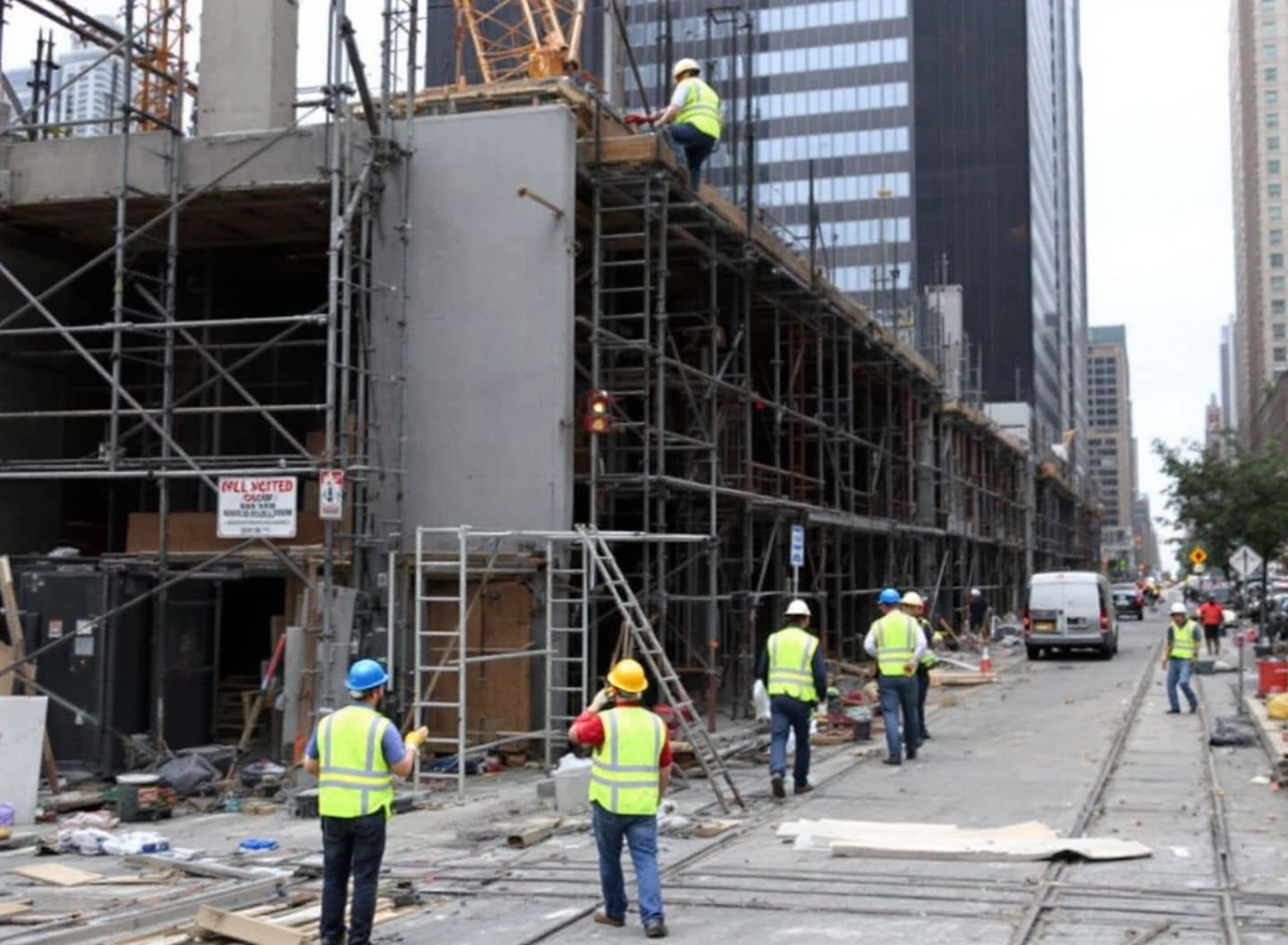
A construction accident doesn't announce itself. One moment you're doing your job; the next, you're on the ground, or worse. In the chaos that follows, most workers don't know what to do first, and that confusion can quietly erode a legal claim that might otherwise be strong. New York has some of the most protective construction worker statutes in the country, but those protections only work if you take the right steps in the right order. This article walks you through the five things that matter most, from the moment of injury through your first meeting with an attorney.
Why the First Hours Matter So Much
Construction accident claims in New York are governed by a patchwork of overlapping laws: state labor statutes, occupational safety regulations, and federal safety standards. Each of those frameworks has its own deadlines, notice requirements, and evidentiary demands. Evidence disappears fast on an active job site. Scaffolding gets re-erected. Ladders get swapped out. Witnesses scatter to other projects. The general contractor's safety supervisor writes an incident report that may or may not reflect what actually happened. Every hour you spend uncertain about your next move is an hour that benefits everyone except you.
Step One: Get Medical Care — Immediately and Completely
This sounds obvious, but workers routinely underestimate injuries. A fall from scaffolding might produce adrenaline that masks a fractured vertebra. A crush injury from falling materials might feel like deep bruising when it's actually internal bleeding. Your first obligation is to your body, not your paperwork.
Go to the emergency room or urgent care even if you think the injury is minor. Tell medical personnel exactly what happened — that you were injured on a construction site, what type of accident it was (fall from height, struck-by, caught-in, electrical contact), and every symptom you're experiencing, including ones that seem small. Medical records are among the most important pieces of evidence in a construction accident case. Gaps in treatment or delays in seeking care get used against injured workers constantly. Insurers and defense attorneys argue that if the injury were serious, you'd have gone to the doctor right away.
Follow through on every referral. If the ER doctor sends you to an orthopedist, go. If the orthopedist orders an MRI, get it. Incomplete follow-through creates gaps that opponents exploit. Keep every record, every discharge instruction, every prescription label, and every bill.
Step Two: Report the Accident and Preserve the Notice
New York law imposes formal notice requirements on certain types of construction accident claims, and failing to give timely notice can bar a claim entirely. If the claim is against a covered public defendant, a notice of claim may be required within 90 days under GML § 50-e; the governing rule depends on the defendant. Even for private claims, prompt formal reporting protects you in multiple ways.
Report the accident to your supervisor or foreman in writing if at all possible. If you can't write because of your injuries, have a coworker or family member help you, or at minimum make the verbal report and follow it up in writing as soon as you're physically able. If your employer maintains an accident log, make sure the entry is accurate. You're entitled to note any errors or omissions. Do not sign any employer-prepared statement that mischaracterizes what happened, and do not give a recorded statement to an insurance company without speaking to an attorney first.
Federal safety standards under 29 CFR 1926.20 require construction employers to maintain accident-prevention programs and conduct inspections. A properly filed employer report can actually help your claim by creating a contemporaneous record that the accident happened on the site, on that day, under those conditions.
Step Three: Document Everything You Can
If your injuries allow it — or if a coworker can do it on your behalf — photograph and video the accident scene before anything is moved or repaired. Get close-ups and wide-angle shots. Photograph the device that failed or was absent: the scaffold, the ladder, the harness, the guardrail, the opening that lacked a cover. Photograph any debris, spilled materials, or broken equipment.
New York Labor Law § 240(1) may impose liability on covered contractors and owners when a required safety-device violation proximately causes an elevation-related injury; the worker’s sole proximate cause and the statutory exemption for certain one- and two-family homeowners remain fact-dependent issues. That's a powerful statute, but it requires showing that the right type of device was absent or inadequate. A photograph of a scaffold missing a guardrail, or a ladder with a broken rung, is direct evidence of that violation. Once the site is cleaned up, that evidence is gone.
Beyond the physical scene, document your own condition. Take photographs of your injuries as soon as possible, and then at regular intervals as they heal or worsen. Keep a written journal of your pain levels, your limitations, what activities you can't do, and how the injury is affecting your daily life and your ability to work. These records matter later, when the question turns to how the injury has affected you.
Hurt on a Construction Site?
Tell us what happened. A licensed New York attorney will review your case and call you — free, no obligation.
Preserve any communications related to the accident: texts with your foreman, emails about unsafe conditions you may have flagged before the accident, and any safety training records or toolbox talk logs you have access to. Under 12 NYCRR 23-1.5, New York's general safety standard for construction, demolition, and excavation operations, employers are required to maintain safe working conditions and protect workers from hazards. Records showing that known hazards were ignored go directly to the question of fault.
Step Four: Identify and Talk to Witnesses
Witness testimony is frequently the deciding factor in contested construction accident cases. If other workers saw what happened, their accounts can corroborate or clarify details that might otherwise come down to your word against the general contractor's incident report.
Get names and contact information from anyone who saw the accident or who has knowledge of the unsafe condition that caused it. This includes coworkers, workers from other trades on the same site, delivery drivers who were on site, and even passersby if the accident was visible from a public area. Don't assume that coworkers will be available later, that they'll remember the details, or that they'll still be working on the same project when your attorney needs to reach them. Construction crews rotate. Projects end.
If a coworker helped you after the accident, that person likely has direct knowledge of the conditions at the scene. If a supervisor responded and made statements about what caused the accident, note exactly what was said and who else heard it. Admissions made in the immediate aftermath of an accident are valuable, and they're easy to deny months later if you don't record them promptly.
It's worth understanding the trade-specific dimension of witness accounts. A roofer, an ironworker, and an electrician each face different hazards, work with different equipment, and operate under different industry standards. A coworker in the same trade understands the mechanism of injury in ways a general laborer might not. If you were working as a scaffold erector and the platform shifted because it wasn't properly planked, a fellow scaffold worker can speak to the standard practice and what was wrong with the setup. That specificity matters.
Step Five: Consult a Construction Accident Attorney Before You Sign Anything
New York construction accident law is genuinely complicated. A § 240(1) claim requires a covered elevation risk, a required safety-device violation, and proximate cause; sole proximate cause and the statutory homeowner exemption must also be considered. The general duty in 12 NYCRR 23-1.5 does not itself predicate a Labor Law § 241(6) claim; a specific, applicable Industrial Code subsection must be violated, constitute negligence, and proximately cause injury, subject to comparative negligence. Workers' compensation provides a separate avenue but limits what you can recover. Third-party liability claims against contractors, property owners, or equipment manufacturers can be filed alongside workers' compensation. Sorting out which claims apply to your situation takes legal analysis, not a checklist.
An experienced construction accident attorney will identify every potential avenue for recovery, calculate the applicable deadlines, send preservation letters to prevent the destruction of evidence, and make sure that no statement you give closes a door before it was fully opened. The value of a construction accident claim varies with the severity of the injury, the permanency of the disability, the lost earning capacity, and the specific legal theories that apply. An attorney can assess those factors in the context of your actual situation.
Do not sign a release or settlement agreement from any insurer, property owner, or contractor without first understanding what rights you're giving up. These documents are drafted to benefit the party offering them, not you. What looks like a fair offer in the early days after an accident can be grossly inadequate once the full picture of your medical needs becomes clear.
The Bigger Picture: Your Rights Were Designed for Exactly This
New York's construction safety laws exist because the legislature recognized that workers on construction sites face hazards that most people never encounter in their working lives. Falls from height remain the leading cause of fatal and serious injuries in construction nationwide. Struck-by incidents, electrical hazards, and caught-in or between accidents round out the most common mechanisms of serious injury. The legal framework, from the Scaffold Law to the federal standards under 29 CFR 1926.20, reflects a policy decision that contractors and property owners who profit from construction work must bear responsibility for maintaining safe conditions.
That framework only protects you if you act. Medical care preserves your health and creates your medical record. Timely reporting creates a contemporaneous record of the accident. Documentation preserves physical evidence before it disappears. Witness information preserves testimony before people move on. And legal counsel makes sure that all of it is put to work effectively, within the applicable deadlines, under the right legal theories. None of these steps is optional. Each one builds on the last.
If you or someone in your family has been injured on a New York construction site, NY Construction Advocate is here to provide the educational resources you need to understand your rights. Construction accidents are serious, and the system that handles them is complex. You don't have to figure it out alone.
Attorney Advertising. Prior results do not guarantee a similar outcome. This article is for general informational purposes only and does not constitute legal advice. NY Construction Advocate connects injured workers with experienced New York construction accident attorneys.
Primary sources
Frequently Asked Questions
Does Labor Law § 240 cover all construction accidents, or only falls?▼
What if my employer says I was at fault for the accident?▼
How soon after a construction accident do I need to see a lawyer?▼
Can I file both a workers' compensation claim and a personal injury lawsuit after a construction accident?▼
What does 12 NYCRR 23-1.5 actually require, and how does it help an injured worker?▼
What if I'm not a documented worker — does New York law still protect me?▼
Get a Free Case Review
Find out if you have a claim under New York Labor Law. A licensed NY attorney will review your case and call you back.