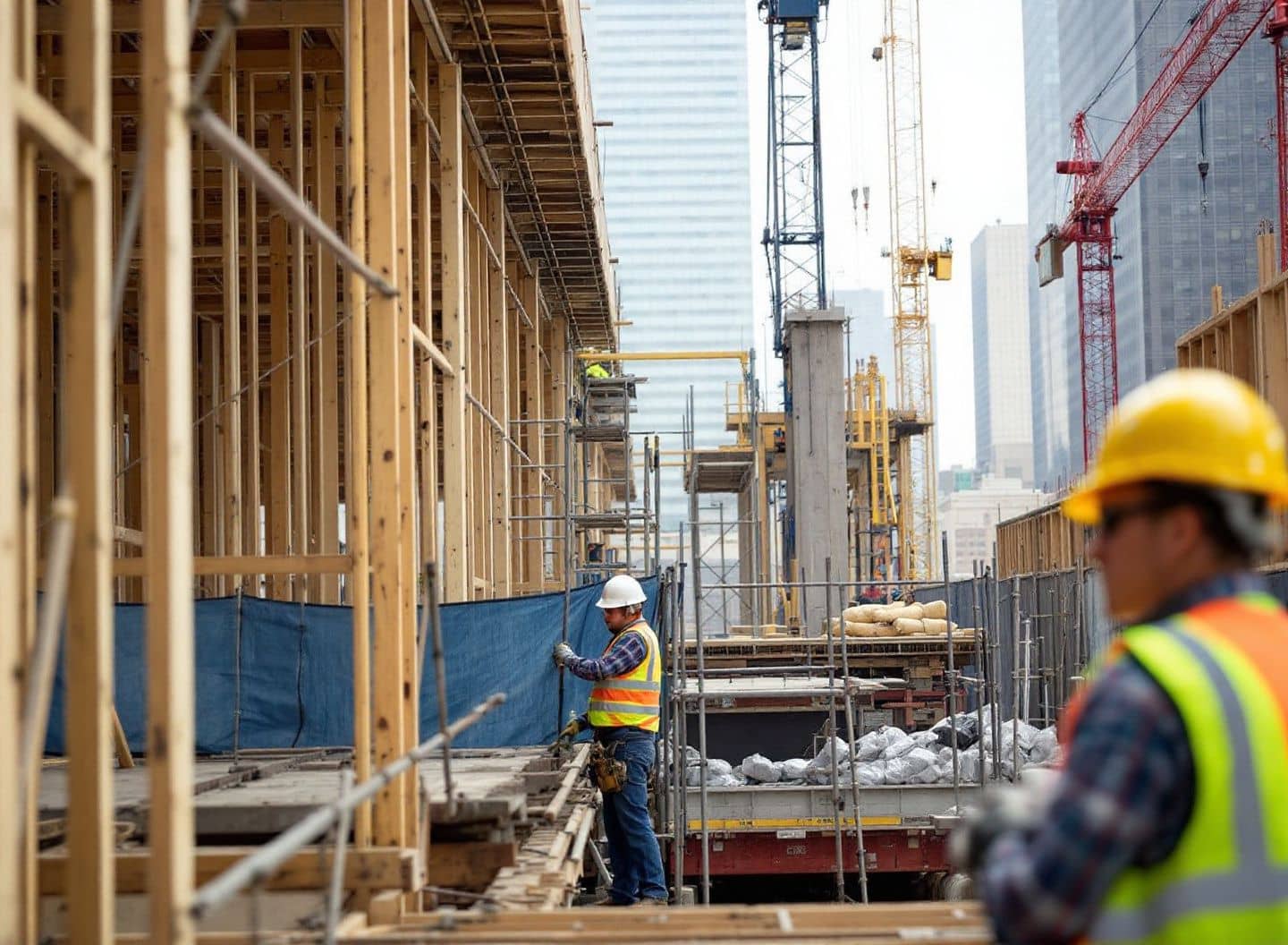
If you've been hurt on a residential construction job in New York, the first question your attorney will ask is almost certainly: who owned the property? That question matters enormously because New York Labor Law contains a special carve-out for owners of one- and two-family dwellings. That carve-out—commonly called the homeowner exemption—can prevent an injured worker from invoking the full force of Labor Law § 240, the so-called Scaffold Law, as well as certain protections under Labor Law § 241. But the exemption has real limits, and courts interpret those limits strictly. Understanding both the scope and the edges of this exemption could make the difference between a viable claim and a dead end.
What Labor Law 240 Actually Does
Labor Law § 240, often called the Scaffold Law, can impose liability on owners and general contractors when a covered elevation-related safety-device violation proximately causes a worker’s injury during covered work. Once a violation and proximate cause are shown, the worker's comparative negligence does not reduce recovery. The claim fails if the worker, rather than any violation, was the sole proximate cause of the accident: adequate safety devices were available, the worker knew both that they were available and that he or she was expected to use them, chose for no good reason not to, and would not have been injured had they been used. The statute covers injuries caused by inadequate scaffolding, ladders, hoists, pulleys, braces, ropes, blocks, and similar elevation-related equipment. Falls are the most common mechanism, but the law also reaches situations where materials drop onto workers below.
The trade-specific risk here is severe. Roofers, painters, siding installers, gutter workers, and masons routinely work at height on residential properties. A carpenter framing a second-story addition is just as exposed to gravity as someone working on a midtown skyscraper. The physics don't change because the building is small. A fall from a poorly braced ladder onto a concrete driveway can be fatal, and even survivable falls frequently result in traumatic brain injury, spinal cord damage, or shattered limbs that permanently alter a worker's ability to earn a living. The severity of the injury shapes everything that follows legally and financially.
The One- and Two-Family Dwelling Exemption: The Basic Rule
Labor Law §§ 240 and 241 both contain express exemptions for owners of one- and two-family dwellings. The statutory language carves out those owners from liability when the owner did not direct or control the work being performed. That phrase—'direct or control'—is critical. The exemption is not automatic just because someone owns a house. It depends on what the homeowner actually did during the project.
The purpose behind the exemption is practical. The legislature recognized that ordinary homeowners hiring someone to fix a roof or replace siding are typically not sophisticated construction actors. They don't carry liability insurance that accounts for Scaffold Law exposure. They don't supervise workers the way a general contractor would. Imposing the same Scaffold Law liability on a retiree who hired a roofer as on a real estate developer seemed disproportionate to the legislature. So the exemption exists as a policy compromise.
When the Exemption Fails: Direction and Control
Here's where homeowners frequently lose the protection they assumed they had. If a homeowner steps beyond the role of a passive property owner and begins directing how the work is performed, supervising the workers, dictating methods, or supplying equipment, courts have consistently held that the exemption no longer applies. The homeowner has, at that point, functioned more like a contractor than a private owner, and the law treats them accordingly.
What does 'direction and control' look like in practice? Courts look at factors like whether the homeowner told workers which tools to use, whether they set the work schedule, whether they required specific methods of completing a task, and whether they were present on the site giving instructions. A homeowner who simply checks in occasionally to see how the renovation is going is very different from one who directs workers to use a specific ladder, instructs them to skip safety tie-offs to move faster, or physically demonstrates how a task should be done. The more the homeowner acts like a supervisor, the weaker the exemption becomes.
Commercial Use and the Homeowner Exemption
Commercial use may affect the exemption, but the purpose of the particular work and the property's use determine whether it applies. Rental income, investment status, or nonoccupancy alone does not settle the question.
The exemption turns on the purpose of the particular work and the property's use, not solely on an owner's investment status, personal occupancy, or number of units.
Labor Law § 200 Still Applies—Even When 240 Doesn't
Hurt on a Construction Site?
Tell us what happened. A licensed New York attorney will review your case and call you — free, no obligation.
Workers hurt on residential sites often assume that if the homeowner exemption blocks their Labor Law § 240 claim, they have no recourse at all. That's not correct. Labor Law § 200 is New York's general duty statute, and it applies broadly. Under Labor Law § 200, property owners and general contractors have a duty to maintain a reasonably safe work environment. Unlike § 240(1), which does not require proof of ordinary negligence, a § 200 claim requires negligence—the worker must show that the owner knew or should have known about the dangerous condition. But it remains a viable theory when homeowner negligence contributed to the injury.
Federal safety standards also remain relevant context. Under 29 CFR 1926.20, employers engaged in construction work are required to initiate and maintain accident prevention programs and to ensure that frequent and regular inspections of job sites, materials, and equipment are conducted. While OSHA standards don't create a private right of action on their own, they set the baseline of reasonable care, and courts and juries can consider them when evaluating whether a party acted negligently under Labor Law § 200. A homeowner who ignored obvious safety hazards on the site may face liability under § 200 even if the exemption shields them from Scaffold Law liability.
Labor Law § 241 and Its Relationship to 12 NYCRR 23-1.5
Labor Law § 241 addresses safety in construction, demolition, and excavation work, and it carries the same homeowner exemption as § 240. However, a § 241(6) claim must be built on a violation of a specific, applicable Industrial Code rule in 12 NYCRR Part 23. General provisions such as 12 NYCRR 23-1.5, which sets out employers' general responsibility, are usually not specific enough. When a contractor or subcontractor violates a specific rule—say, by failing to provide required fall protection or using damaged equipment—the violation can support a § 241(6) claim if it amounted to negligence and was a proximate cause of the injury; comparative fault can reduce recovery.
The § 241 exemption also depends on the purpose of the particular work and the property's use, as well as whether the owner directed or controlled the work. A qualifying homeowner who did not direct or control the work may be exempt. But claims against the contractor or subcontractor who actually did direct the work are unaffected by the homeowner's exemption status. Workers should understand that the homeowner exemption is a defense available only to the owner of the one- or two-family dwelling. It doesn't insulate anyone else on the project.
General Contractors and Subcontractors: The Exemption Doesn't Reach Them
This point deserves emphasis because it's frequently misunderstood. The homeowner exemption protects the qualifying property owner only. A general contractor hired to manage a residential renovation isn't a one- or two-family dwelling owner, so no exemption applies to them. If a subcontractor's worker is hurt because the general contractor failed to provide proper fall protection, that worker still has a full Scaffold Law claim against the GC, regardless of what protections the homeowner might enjoy.
Workers' compensation coverage adds another layer to this analysis. In many residential construction situations, the injured worker will have a workers' comp claim against their direct employer. But workers' comp typically limits the worker's ability to sue the employer directly in tort. The real opportunity often lies in third-party claims against the general contractor, a property owner who doesn't qualify for the exemption, or a subcontractor whose negligence contributed to the injury. Mapping those relationships carefully is essential before concluding that a residential accident case has limited legal options.
How Courts Test the Exemption: Practical Factors
New York courts have developed a body of case law identifying the factors that determine whether the exemption applies. The inquiry is fact-specific. Courts look at: (1) whether the homeowner was present at the time of the accident; (2) whether the homeowner gave instructions about how specific tasks should be performed; (3) whether the homeowner supplied any tools, materials, or equipment used in the work; (4) whether the homeowner established the work schedule; and (5) the overall degree of involvement the homeowner had in the day-to-day progress of the project. No single factor is dispositive. It's the totality of the owner's conduct that matters.
Injured workers and their attorneys should gather evidence on all of these points early. Witness testimony from co-workers, text messages between the homeowner and workers, job site photographs, and records of who purchased materials can all shed light on the homeowner's actual level of involvement. Cases that initially appear to be blocked by the exemption sometimes reveal significant homeowner involvement once the discovery process unfolds.
What Injured Workers Should Do After a Residential Construction Accident
If you're hurt on a one- or two-family residential job site, don't assume the homeowner exemption ends your claim. Document everything you can: the property address, the name of whoever hired you, the identity of any general contractor on the project, how work was supervised, and whether the homeowner was present and giving directions. Report the injury to your employer and seek medical attention immediately. The severity of your injury will shape the value of any claim you can bring, and gaps in medical treatment create evidentiary problems later.
New York's Labor Laws are among the strongest worker protection statutes in the country, but they have nuances that genuinely matter in residential cases. The homeowner exemption is one of the most significant. Consulting with an attorney who concentrates on New York construction accident law as soon as possible after your injury is the most important step you can take.
Attorney Advertising. Prior results do not guarantee a similar outcome. This article is for general informational purposes only and does not constitute legal advice. NY Construction Advocate connects injured workers with experienced New York construction accident attorneys.
Primary sources
Frequently Asked Questions
Does the homeowner exemption automatically apply to anyone who owns a house where I was working?▼
What if the homeowner was renting out the property instead of living in it?▼
Can I still sue a general contractor even if the homeowner is protected by the exemption?▼
What is the difference between a Labor Law § 240 claim and a Labor Law § 200 claim in a residential accident case?▼
How do federal OSHA standards factor into a New York residential construction injury case?▼
Does the homeowner exemption apply to Labor Law § 241 claims as well as § 240?▼
What kind of evidence helps show that a homeowner actually directed or controlled the work?▼
Get a Free Case Review
Find out if you have a claim under New York Labor Law. A licensed NY attorney will review your case and call you back.