Construction Accident Lawyer in Onondaga County
Injured on a construction site in Onondaga County? NY Labor Law §240 may hold the property owner strictly liable. Free case review — (914) 407-3717.
The short answer
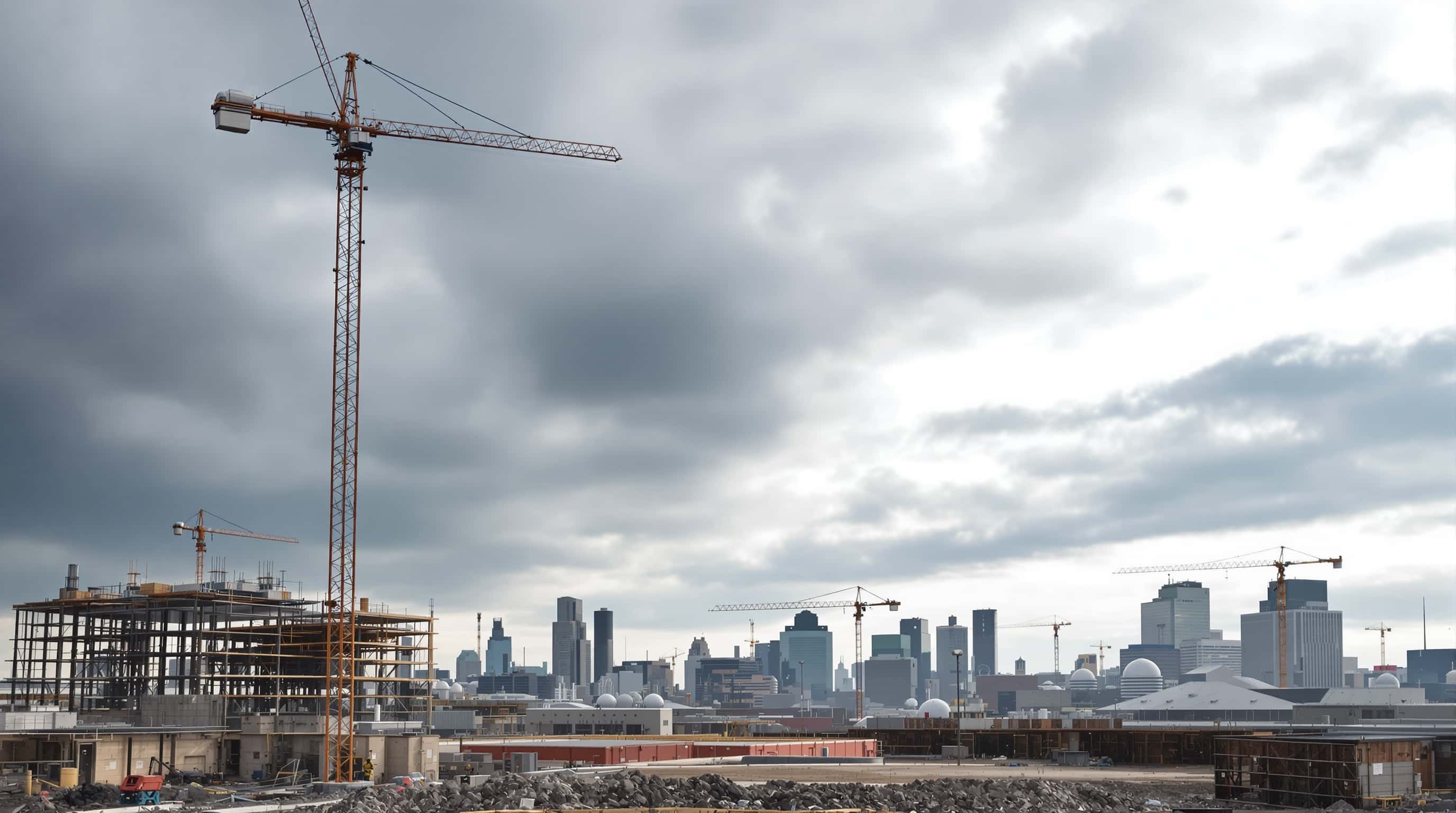
Onondaga County is Central New York's construction hub, with Syracuse's Micron Technology semiconductor megafab in Clay — expected to be a $100 billion investment over 20 years — representing the largest single economic development project in New York State history. The I-81 viaduct project, converting a downtown Syracuse highway into an urban grid, is simultaneously one of the most complex demolition and reconstruction projects in the state. Syracuse University's campus renovation program, Upstate Medical University expansion, and the restoration of Onondaga Lake — the most polluted lake in America at its nadir — add construction activity across every sector of the county.
First things to prove
How a Onondaga County Construction Accident Case Gets Reviewed
A strong review starts with the law that applies, the proof that can still be preserved, and the local court and deadline facts that shape the claim.
Statutory fit
The first question is whether the injury turns on a fall, a falling object, a specific Industrial Code violation, or ordinary site negligence. That decides whether Labor Law §240, §241(6), or §200 leads the analysis.
Site proof
The useful proof is concrete: incident reports, photos or video, the failed safety device, witness names, foreman and GC details, and medical records from Upstate University Hospital, Crouse Hospital, and follow-up providers.
Venue and deadline
Supreme Court, Onondaga County is the local trial court for Onondaga County construction cases. If a public owner is involved, a 90-day Notice of Claim issue has to be checked immediately.
Attorney review
Submitted construction accident cases are reviewed by a licensed New York attorney. If co-counsel is brought in, any fee arrangement is disclosed in writing.
NY Labor Law §240 and §241 — What Every Worker in Onondaga County Should Know
Central New York's blend of healthcare, university, and highway construction creates consistent §240 exposure across the region. Onondaga County, home to roughly 469,000 people, carries a steady pipeline of commercial, institutional, and infrastructure work — enough active sites that serious falls occur every year.
The county's active work — bridge and elevated-roadway, hospital and healthcare and data-center and high-tech work — concentrates the precise risks these statutes were built around: work over open spans and live traffic, where a fall or an unsecured tool carries extreme consequences; and dense multi-trade work on scaffolds and lifts inside buildings that are often still partly occupied. When that work is done without proper scaffolding, fall protection, or secured loads, a single failure can put a worker in the hospital for months.
New York Labor Law §240(1) — the Scaffold Law — holds property owners and general contractors strictly liable when a gravity-related hazard injures a worker: a fall from a scaffold or ladder, or an object that falls because it was not properly secured. "Strictly liable" means the owner's own negligence does not have to be proven; if the safety device failed to give proper protection, liability attaches. That standard does real work in a county like Onondaga County, where a mix of public and private projects keeps crews at height year-round. §241(6) runs alongside it for specific Industrial Code violations, and §200 covers ordinary negligence — our full Labor Law §240 guide breaks down how each statute applies and what defenses to expect. These civil claims can proceed alongside a workers' comp claim and may allow recovery for losses that workers' comp does not cover, including pain and suffering and broader lost-wage damages.
Active Construction in Onondaga County — Where Accidents Happen
Recent and ongoing work in Onondaga County includes Micron Technology semiconductor megafab, Clay NY, I-81 Community Grid viaduct replacement, Syracuse, Onondaga Lake cleanup and shoreline park construction, and Upstate Medical University campus expansion. These are bridge and elevated-roadway, hospital and healthcare and data-center and high-tech work sites, and they carry the hazards that define §240 litigation: work over open spans and live traffic, where a fall or an unsecured tool carries extreme consequences; and dense multi-trade work on scaffolds and lifts inside buildings that are often still partly occupied. The crews on them are represented by locals such as Laborers Local 785, Carpenters Local 277, Iron Workers Local 60, Operating Engineers Local 832, among others operating across the region.
Active job sites are where §240 injuries actually happen. When an employer or general contractor fails to erect proper scaffolding, supply fall harnesses, or secure materials against falling, and a worker is hurt, the protections of §240 and §241(6) are available to that worker — regardless of what a supervisor or insurer says afterward.
Too many workers in Onondaga County are told after an injury that workers' comp is their only option, or that they were partly to blame. In a valid §240 case, comparative negligence is not a defense. If a required safety device failed to do its job, the focus is on that failure — not on blaming the injured worker.
Building Onondaga County: Where the Work — and the Risk — Are
Onondaga County's built environment runs from landmarks like the Syracuse Weighlock Building (built 1850) to today's active job sites. The only surviving Erie Canal weighlock building in the country still stands in downtown Syracuse as the Erie Canal Museum; today the county's largest project is Micron's semiconductor megafab in the Town of Clay. Construction now concentrates in Syracuse, the Town of Clay, and Cicero — and each is a place where work over open spans and live traffic, where a fall or an unsecured tool carries extreme consequences; and dense multi-trade work on scaffolds and lifts inside buildings that are often still partly occupied.
These are the Onondaga County sites where §240 injuries actually happen: a worker at height without proper fall protection, or a load that falls because it was never secured. When that failure causes the injury, Labor Law §240(1) places the loss on the property owner and general contractor — not on the worker who was hurt.
The “Fatal Four” — How Construction Workers Are Killed
OSHA attributes the majority of construction deaths to four hazards. Together the “Focus Four” account for more than half of all construction-worker fatalities nationwide — and each one carries its own New York Labor Law analysis.
~36.5%
Falls
from roofs, scaffolds, ladders, and unguarded edges
~10.1%
Struck by object or vehicle
falling material, swinging loads, backing equipment
~8.6%
Electrocution
contact with power lines, energized circuits, faulty tools
~2.5%
Caught-in / between
trench cave-ins, machinery, collapsing structures
Source: U.S. OSHA construction-industry fatality data (“Focus Four” hazards). Percentages are of construction-worker fatalities nationwide.
Official Sources Behind This Page
These government and regulatory references support the construction safety and Labor Law context on this page.
Filing Your Claim: Supreme Court, Onondaga County
Construction accident lawsuits arising in Onondaga County are generally filed in the Supreme Court, Onondaga County, located at 401 Montgomery Street, Syracuse NY 13202 in Syracuse. The court sits within New York's Appellate Division, 4th Department — the appellate body that reviews trial decisions in Onondaga County cases. The department matters more than people expect: each one has developed its own §240 case law over decades, and an attorney who knows how the 4th Department reads the statute will frame your claim accordingly.
Deadlines are firm. Under CPLR §214 you have three years from the date of injury to bring a personal-injury claim. Wrongful-death claims carry a shorter two-year window, and any claim against a government entity may require a Notice of Claim within 90 days. In Onondaga County, where public projects sit beside private ones, that 90-day trap catches more workers than it should — do not wait to find out which rule applies to your site.
If you were treated at Upstate University Hospital, Crouse Hospital, or another trauma center after your accident, those medical records become core evidence of your damages. Preserving them early — together with incident reports, OSHA logs, photographs, and witness contact information — protects the value of your case.
Supreme Court, Onondaga County
401 Montgomery Street, Syracuse NY 13202
Union Locals Active in Onondaga County
Union members may have additional resources through their trust funds, but union membership does not affect your right to pursue an independent Labor Law §240 or §241(6) claim.
Common Questions About Construction Accidents in Onondaga County
Get a Free Case Review
Tell us what happened. A licensed New York attorney will review your case and call you — no obligation.
Injured on a Onondaga County Construction Site?
Call (914) 407-3717 for a free case review. We handle §240 and §241 claims throughout Onondaga County and all of New York State. No fee unless we win.
Construction Accident Lawyers in Nearby Counties
Common Construction Accident Cases We Handle
Onondaga County Construction Accident Cases We Handle
Each accident type carries its own NY Labor Law analysis. Select a case type for detailed legal information specific to Onondaga County.
This website is operated by NY Construction Advocate, the client intake service for Haddock Law, a New York law practice. If you contact us, your case will be reviewed by our attorneys. If co-counsel is brought in, any fee arrangement will be disclosed in writing. This is attorney advertising.