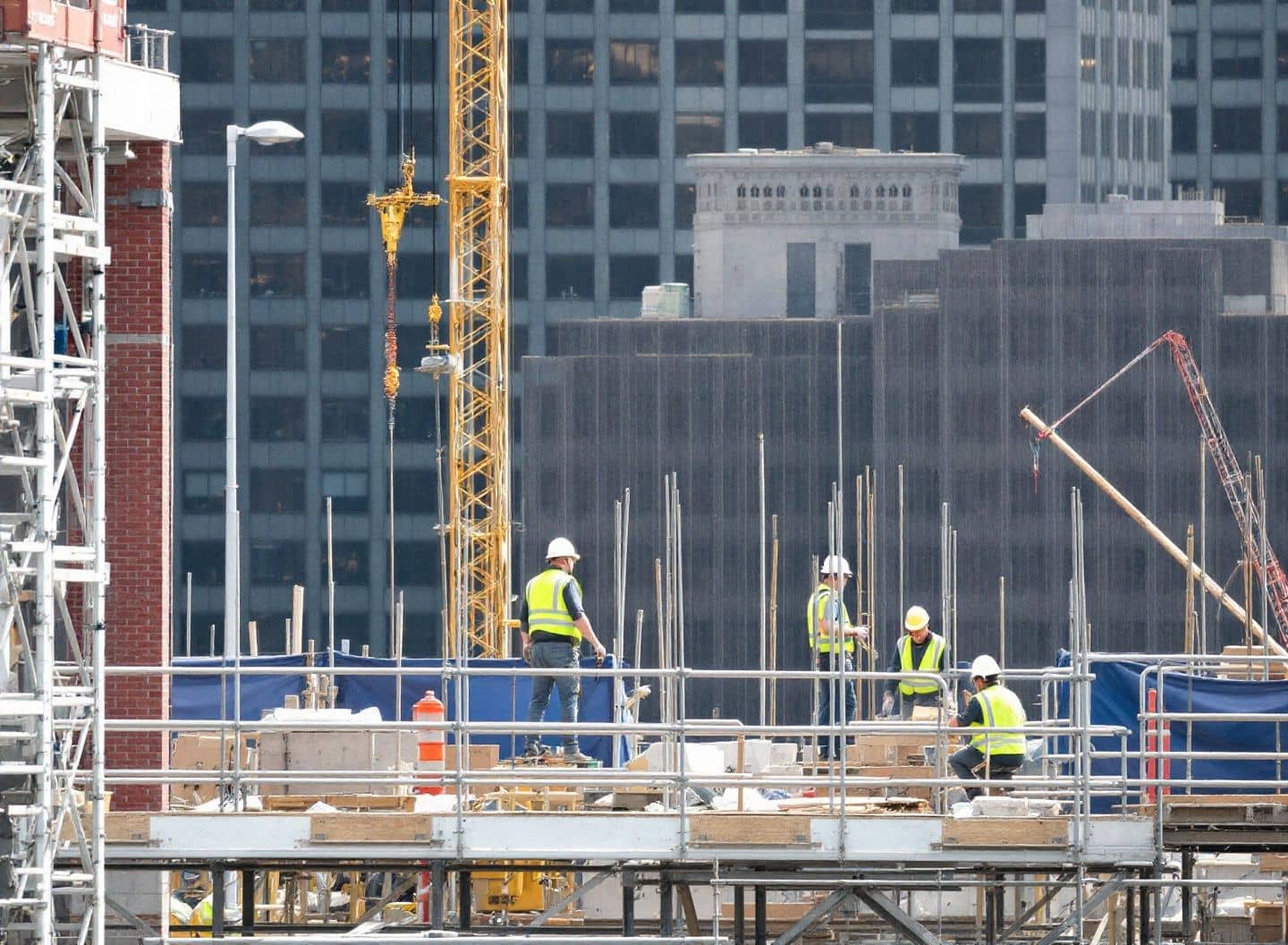
When a trench wall collapses, workers rarely have time to react. The entire event, from the first crack in the soil to full burial, can take less than a second. Yet most trench cave-ins aren't random acts of geology. They're predictable failures, often tied directly to a pile of excavated dirt sitting too close to the edge. That pile has a name in the industry: a spoil pile. And in New York, both federal and state regulations impose specific, concrete rules about where that material must go. When contractors ignore those rules, workers pay the price.
What Is a Spoil Pile and Why Does Placement Matter?
A spoil pile is simply the mound of earth, rock, or fill that's removed from a trench or excavation during digging. It sounds mundane, but that pile represents a significant physical load. Depending on soil density, a cubic yard of typical earth weighs somewhere between 2,000 and 3,000 pounds. Stack several cubic yards of that material within a foot or two of an open trench, and you've created what engineers call a surcharge load: a concentrated weight pressing down and outward, directly above the trench wall you're relying on to stay vertical.
The problem isn't just weight alone. It's where that weight sits relative to the trench's failure plane. Every soil type has a natural angle of repose, a slope at which it will stand without sliding. When you dig a vertical trench wall and then pile heavy material at the edge, you're effectively shortening the horizontal distance the soil needs to resist collapse. The math isn't forgiving, and the consequences aren't either.
The Mechanics of a Trench Wall Collapse
To understand why spoil pile placement causes cave-ins, you need a basic picture of what holds a trench wall up in the first place. Soil is held vertical in a trench wall by two forces: cohesion, which is the stickiness between soil particles, and internal friction, which is the resistance generated as particles press against one another. In firm, undisturbed clay soils, cohesion alone can hold a vertical wall for hours or even days. But those conditions aren't always present on New York job sites.
Many urban excavations, particularly in boroughs like Brooklyn, Queens, and the Bronx, involve Type C soil: sandy, granular, or previously disturbed fill material. Type C soil has very low cohesion. It doesn't stick to itself the way clay does. When a trench is dug in Type C soil, the wall is already operating near its margin of safety even before anyone adds load to the surface. Then comes the surcharge overloading.
When excavated soil, equipment, or materials are piled within two feet of a trench edge, they increase the lateral pressure on the wall below. Picture it this way: the weight of the spoil pile pushes down, but because it's sitting right at the edge, that force transfers not just downward but outward, into the trench face. As the surcharge load increases, the lateral earth pressure at the base of the wall climbs beyond what the soil's internal friction can resist. The wall shears along a failure plane, and it does so suddenly. Workers inside the trench are struck and buried by hundreds or thousands of pounds of material with no warning.
It's worth noting that surcharge overloading doesn't only come from spoil piles. Excavators, backhoes, concrete trucks, and stacked materials all contribute to surcharge. But the spoil pile is unique because it's a direct byproduct of digging. Every foot deeper the crew goes, the pile grows. If no one is managing its location, it creeps closer to the edge simply because that's where it landed when it came off the bucket.
Federal Requirements: 29 CFR 1926.652
OSHA's excavation standard, found at 29 CFR 1926.652, sets the federal baseline for trench and excavation safety on construction sites. Under this standard, employers must protect workers in excavations from cave-ins using sloping, shoring, or trench boxes, with the specific method determined by soil classification and excavation depth. But the standard also addresses what happens at the surface around the trench, which is directly relevant to spoil pile placement.
Excavated material, equipment, and other materials must be kept at least two feet from the edge of the excavation. That two-foot setback isn't arbitrary. It's the minimum distance OSHA engineers determined was necessary to prevent surface loads from immediately destabilizing the trench wall. At two feet, the surcharge load acts at a distance sufficient for the soil's friction angle to dissipate most of the lateral force before it reaches the trench face. Closer than that, the geometry doesn't work in the soil's favor anymore.
Critically, 29 CFR 1926.652 also requires that a competent person be on site to classify soil conditions, inspect the excavation daily, and identify hazardous conditions before workers enter. If a competent person is doing their job, a spoil pile creeping toward the edge should never go unaddressed. When employers fail to designate a true competent person, or when that person is pressured by production schedules to overlook hazards, workers end up in unsupported trenches with overloaded edges above them.
New York State Requirements: 12 NYCRR 23-4
New York doesn't simply defer to federal OSHA standards. The state maintains its own Industrial Code, and Part 23 governs construction, demolition, and excavation operations. Specifically, 12 NYCRR 23-4 addresses protection in excavation work, including rules about materials and equipment near trench edges. These aren't just recommendations. They're enforceable safety regulations, and their violation carries legal consequences under New York's construction safety framework.
Under 12 NYCRR 23-4, excavations must be maintained in a safe condition. This includes controlling what sits at the perimeter. Spoil, equipment, and materials must be kept back from the edge far enough to prevent overloading the trench wall. The state code reinforces the federal setback requirements and adds a layer of state-specific oversight that OSHA inspection alone doesn't always provide. New York State's Department of Labor enforces these provisions separately from federal OSHA, meaning contractors can face overlapping regulatory scrutiny when they ignore spoil placement rules.
Hurt on a Construction Site?
Tell us what happened. A licensed New York attorney will review your case and call you — free, no obligation.
Compliance with 12 NYCRR 23-4 requires active management, not just a one-time setup. As excavation depth increases, as the crew rotates, as the workday extends, the spoil pile situation changes. What was safely placed in the morning may be dangerously close by afternoon if workers kept adding to it without repositioning the pile. Supervisors and competent persons must monitor this continuously.
Labor Law § 241(6) and a Worker's Right to a Safe Excavation
For injured workers in New York, Labor Law § 241(6) is one of the most significant tools available. The statute requires that construction, excavation, and demolition work be conducted in a manner that provides reasonable and adequate protection for the safety of workers. What makes § 241(6) powerful is that it's a non-delegable duty. Owners and general contractors can't shift responsibility for compliance to subcontractors or lower-tier parties. If the site doesn't meet the required safety standards and a worker is hurt, the owner and general contractor face liability regardless of who actually placed the spoil pile in the wrong location.
Labor Law § 241(6) claims are most effective when the plaintiff can point to a specific violation of an applicable regulation, which is where 12 NYCRR 23-4 becomes essential. A proven violation of 12 NYCRR 23-4's excavation requirements can establish the predicate regulatory breach needed to support a § 241(6) claim. That connection, from the specific code violation to the injury, is the spine of many excavation accident lawsuits in New York.
It's worth emphasizing that workers' compensation is often the exclusive remedy for workplace injuries in New York when it comes to claims against employers. But Labor Law § 241(6) creates a separate avenue against owners and general contractors who didn't employ the injured worker directly. That distinction matters enormously. The value of a claim varies with the severity of the injury, but trench collapse injuries tend to be severe: crush injuries, traumatic brain injury, spinal injury, asphyxiation, and fatalities are all documented consequences of cave-ins.
Trade-Specific Risk: Who Works in Trenches?
Trench and excavation work isn't performed by a single trade. In New York, laborers, pipefitters, plumbers, electricians, ironworkers, and operating engineers all spend time in or around excavations. Utility installation, foundation work, sewer and water main repair, and underground infrastructure projects all require people to work at depths where a cave-in is potentially fatal.
The risk isn't uniform across trades, though. Workers who enter trenches to make connections, lay pipe, or pour footings are in the most direct danger because they're physically inside the excavation when a collapse occurs. Operating engineers running equipment near the trench edge face a different but related risk: equipment can vibrate soil, loosen the spoil pile, and contribute to wall destabilization without anyone in the cab recognizing what's happening below.
Laborers are particularly vulnerable because they're often assigned the unglamorous but essential tasks that require time at the trench bottom, clearing debris, laying bedding material, and supporting pipe installation. They're also often the workers with the least experience on a given site, and the least organizational power to push back when a supervisor tells them to get in the trench even when conditions look wrong.
Recognizing a Dangerous Spoil Pile Situation
Workers and their representatives should know what a dangerous spoil pile setup looks like. The most obvious sign is a pile that's been deposited right at the edge of the cut, with no visible gap between the base of the pile and the lip of the trench. But the two-foot minimum setback is just that: a minimum. In sandy or loose soils, in deep trenches, or in wet conditions, a two-foot setback may not be sufficient, and a competent person should be requiring additional clearance.
Other warning signs include cracks in the soil surface running parallel to the trench edge (a sign the wall is beginning to move), standing water in or near the excavation (water drastically reduces soil cohesion), and spoil piles that have spread or slumped toward the edge after being initially placed further back. If a worker notices any of these conditions, the right move is to exit the trench and report the hazard to a supervisor before anyone re-enters. Under federal law, workers have the right to refuse entry into conditions they reasonably believe present an imminent danger.
What Injured Workers Should Know About Their Options
If a worker is injured in a trench cave-in in New York, the first priority is medical care. After that comes documentation: photos of the trench, the spoil pile location, any shoring or protective systems (or the absence of them), and the soil conditions. Witnesses matter too. Co-workers who saw the setup before the collapse can speak to how the spoil pile was positioned and whether a competent person was present.
Workers' compensation will cover medical expenses and lost wages regardless of fault, but it doesn't fully compensate for the kind of life-altering injuries a cave-in can cause. A Labor Law § 241(6) claim grounded in violations of 12 NYCRR 23-4 and supported by evidence of 29 CFR 1926.652 non-compliance can seek broader damages from owners and general contractors. The specifics of any claim depend on the individual facts, and consulting with an attorney experienced in New York construction law is the appropriate next step for any injured worker or their family.
Attorney Advertising. Prior results do not guarantee a similar outcome. This article is for general informational purposes only and does not constitute legal advice. NY Construction Advocate connects injured workers with experienced New York construction accident attorneys.
Primary sources
Frequently Asked Questions
How far must a spoil pile be kept from a trench edge under OSHA rules?▼
Does New York have its own rules about spoil pile placement, separate from federal OSHA?▼
What is Labor Law § 241(6) and how does it apply to trench cave-in injuries?▼
Why is Type C soil particularly dangerous in trenching operations?▼
Can a worker refuse to enter a trench they believe is unsafe because of spoil pile conditions?▼
What evidence is most important after a trench cave-in injury in New York?▼
Get a Free Case Review
Find out if you have a claim under New York Labor Law. A licensed NY attorney will review your case and call you back.