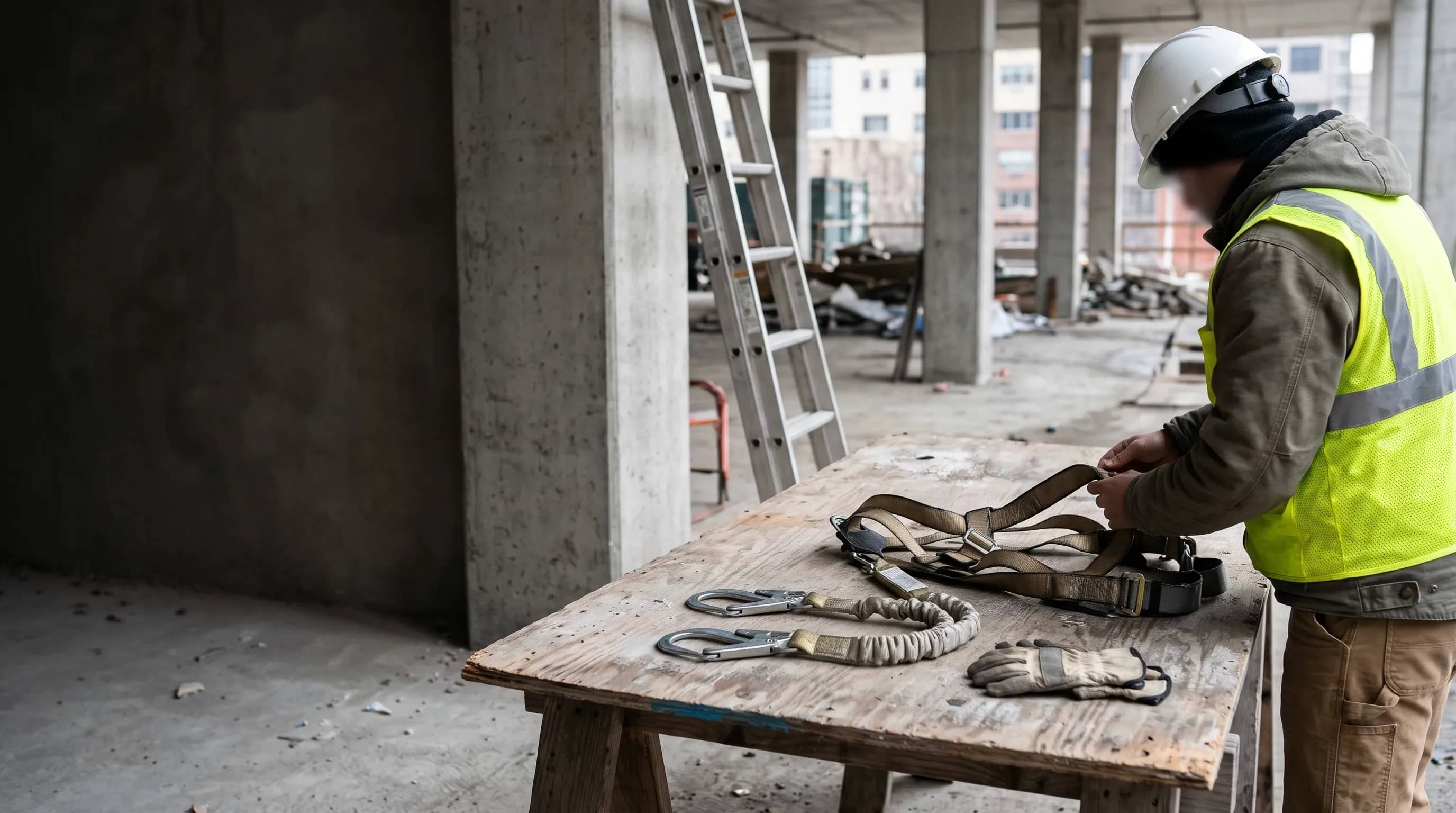
If a ladder, harness, lanyard or other piece of safety gear fails and a construction worker is hurt in New York, there can be two separate claims. One is against the property owner and general contractor under Labor Law 240(1). The other is a product liability claim against the company that made or sold the defective equipment. A New York construction injury lawyer can look at both.
Which defective ladders, harnesses and safety gear lead to product claims?
Safety equipment on a construction site is supposed to work the one time it really matters. When it does not, the failure itself often points to a defect. Common examples include:
Not every failure is a product defect. Equipment can fail because it was misused, worn out, damaged earlier or never suited to the job. Sorting that out is what the investigation and the expert testimony in these cases are for.
What makes a product defective under New York law?
New York recognizes three kinds of product defect, and a claim can rest on any of them.
A manufacturing defect means the particular item came off the line different from the way it was designed, such as a harness with stitching that was never completed or a ladder rail made from flawed material. Other units of the same model may be fine.
A design defect means the whole product line is unreasonably dangerous as designed. Under the Court of Appeals decision in Voss v. Black & Decker (1983), the question is whether the product's risks outweigh its usefulness, and courts look at whether a safer design was feasible. As one appellate court summarized it in Warnke v. Warner-Lambert, the injured person has to show the product was not reasonably safe as designed and that the design was a substantial factor in causing the injury.
A warning defect means the product lacked adequate warnings or instructions about a danger the maker knew or should have known about, such as how a component must be connected or when it must be retired.
These claims can be brought against the manufacturer and, in many cases, against distributors and sellers that sold the product in the ordinary course of their business. For a manufacturing defect, the worker does not have to show the company was careless, only that the item was defective and caused the injury. Design and warning claims look harder at the company's choices, such as whether a safer design was feasible or whether a danger was one it knew or should have known about.
When is a broken ladder a product defect?
Ladders fail in ways that can point to the product itself: a side rail that buckles under a normal load, a rung or weld that breaks, a spreader or lock that releases, or a foot that gives way on an ordinary surface. If the ladder was used the way it was meant to be used and still failed like that, a manufacturing or design defect is a real possibility, and an engineer examining the ladder can often tell.
Many ladder falls are not product failures, though. A sound ladder that was not secured, was set at the wrong angle or was too short for the work is a Labor Law 240(1) problem for the owner and contractor, not a defect. OSHA's ladder standard, 29 CFR 1926.1053, also requires ladders with structural defects to be tagged and taken out of service, so a damaged ladder that was kept in use points back at the site. Our article on defective and unsecured ladders explains how 240(1) treats each situation.
Hurt on a Construction Site?
Tell us what happened. A licensed New York attorney will review your case and call you — free, no obligation.
How does a product claim fit with a Labor Law 240 claim?
The two claims run side by side against different defendants.
Under Labor Law § 240(1), owners and contractors must provide scaffolding, hoists, ladders, ropes and other devices that give proper protection to workers exposed to elevation-related risks during covered work such as construction, demolition, repair or painting, with an exception for owners of one- and two-family homes who do not direct or control the work. When a device fails to give that protection and the failure is a proximate cause of the injury, the owner and general contractor are responsible, and the worker's own carelessness does not reduce the recovery. If the worker's own conduct was the sole proximate cause, the claim fails. Our article on fall arrest anchor point failures covers how 240(1) applies when fall protection fails.
The product claim is against the company behind the equipment. Under New York's comparative fault rule, CPLR 1411, a worker's own share of fault in a product case does not bar the claim, but it reduces the recovery in proportion.
The worker's own employer is usually handled through workers' compensation instead. If a third-party claim succeeds, the workers' compensation insurer generally has a lien on the recovery for the benefits it paid. For how the different defendants fit together, see owner, GC, sub and manufacturer: untangling defendants.
What defenses do manufacturers raise?
The most important is substantial modification. Under Robinson v. Reed-Prentice (1980), a manufacturer is generally not responsible when someone else later altered a product that was safe when it left the manufacturer's hands, and that alteration caused the injury. In Mercedes v. 248 JD Food Corp. (2020), for example, an appellate court applied that rule where a machine had been rewired after it was sold to bypass its safety interlock.
Manufacturers also commonly argue that the equipment was misused, used beyond its intended limits, damaged after it was sold, or kept in service when it should have been retired. Fall protection is a good example. OSHA rules require personal fall arrest systems to be inspected before each use (29 CFR 1926.502(d)(21)) and, once they have taken the force of a fall, removed from service until a competent person finds them undamaged and fit to reuse (29 CFR 1926.502(d)(19)). Whether those steps were followed affects both the product claim and the Labor Law claim.
Why does keeping the defective ladder or harness matter?
In a product case, the equipment is the most important evidence. An engineer needs to examine the actual harness, lanyard or ladder to tell whether it failed because of a defect, wear, damage or misuse. If it is thrown away, repaired or returned to service, that answer may be lost.
The problem is that the injured worker rarely has the equipment. It usually stays with the employer or the contractor. Practical steps:
Courts can penalize a party that destroys evidence it should have kept. The employer is often not a party to the lawsuit at all, which is one more reason to send a preservation letter early. Our article on preserving the defective ladder or tool explains how that works.
How long do you have to bring a claim?
For a personal injury claim based on a defective product, New York's general deadline is three years under CPLR 214(5). As the Court of Appeals explained in Snyder v. Town Insulation (1993), the claim generally accrues when the injury happens, which for equipment that fails on a job site is usually the day of the accident.
Other deadlines can be much shorter. If the job was on property owned by a city, a county, NYCHA or the State, the deadline to give notice of a claim against that public owner is generally 90 days from the injury. See the 90-day notice of claim trap. A wrongful death claim on behalf of a family generally has a two-year deadline. A lawyer who handles New York construction cases can tell you which deadlines apply to each defendant.
Attorney Advertising. Prior results do not guarantee a similar outcome. This article is for general informational purposes only and does not constitute legal advice. NY Construction Advocate connects injured workers with experienced New York construction accident attorneys.
Primary sources
Frequently Asked Questions
Can I sue the manufacturer if my harness or ladder failed?▼
Do I have to prove the manufacturer was careless?▼
Can I bring a Labor Law 240 claim and a product claim at the same time?▼
Is every broken ladder a defective product?▼
What if someone modified the equipment?▼
What should I do with the equipment that failed?▼
How long do I have to file a product liability claim in New York?▼
Get a Free Case Review
Find out if you have a claim under New York Labor Law. A licensed NY attorney will review your case and call you back.